Pathophysiology animations
1 / 1
tl;dr;
Nursing students need deep pathophysiology knowledge for patient care, yet many struggle with complex concepts. Our animations visualize molecular mechanisms, helping connect disease to treatment
2025
About
the project
A series of short (1–2 minute) educational animations that explain the molecular and cellular mechanisms underlying chronic diseases – covering topics such as:
- asthma,
- insulin signalling,
- stress response,
- thyroid and calcium homeostasis,
- Parkinson’s disease, and
- blood-glucose control.
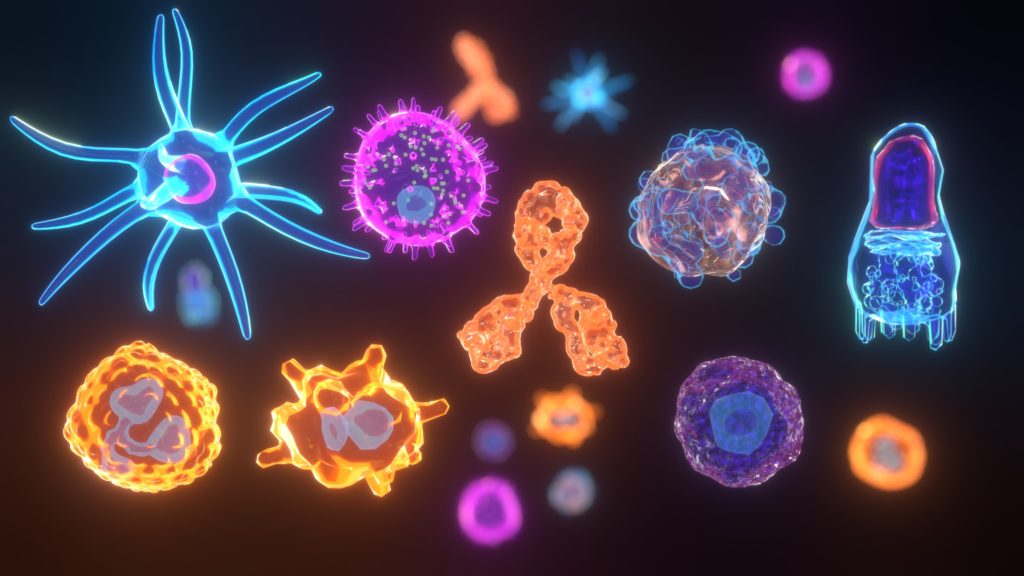
The nervous system firing signals throughout the body.
How has rich media enhanced this project?
Animated zoom-throughs (organ → tissue → cell → molecule) turn abstract processes into concrete visuals; labels and diagrams support terminology; and a mixed delivery (voice-over for some pieces, step-through next/previous controls for others) caters to different learning preferences.
Together, these choices are designed to build stronger mental models and long-term memory associations, and to help students link physiology to pharmacological mechanisms. Self-assessment points are embedded into the delivery, providing students a means of clarifying understanding as they learn.Animation illustrating the processes in a bronchiole associated with asthma.
How will we measure engagement?
Learning impact:
Pre/post quiz gains on targeted concepts; performance on related assessment items.
Interaction analytics:
Video completion and replay rates; dwell time; progression through step-through segments.
Student voice:
Quick in-unit pulse surveys on clarity and confidence; open-text feedback on usefulness.
Course signals:
Correlations with unit pass rates and reduced help-request volume on the covered topics.
Screen capture from a walkthrough explaining how glucose is regulated and how insulin is produced.